

Residential Electrician Certificate
This 46-week program provides comprehensive training in residential electrical wiring, installation, and safety practices - 20 weeks of online simulation instruction and 6 months of paid apprenticeship with a local electric company.
Course overview:
Residential & commerical wiring
- Installation: Master three-way/four-way switches, lighting circuits, and 100/200-amp service entrances.
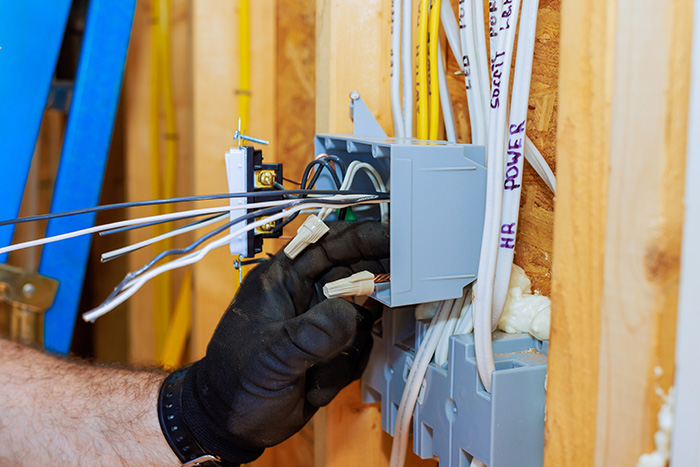
- Procedures: Perform rough-in, trim-out, wire labeling, and circuit termination.
- Hardware: Gain experience bending conduit, mounting electrical boxes, and installing fire blocking.
Technical skills & theory
- Blueprints: Learn to read residential and commercial plans and interpret complex electrical schematics.
- Compliance: Apply National Electrical Code® (NEC) standards for sizing conductors, fuses, and breakers.
- Specialized Systems: Study motor wiring, voltage requirements, and renewable energy photovoltaic systems.
Hands-on & digital learning
- Interactive Training: Access 30+ virtual simulations, 3D models, and troubleshooting scenarios.
- Field Skills: Practice wire splicing, fishing cable, and servicing overhead entrances.
- Tools & Safety: Develop proficiency with professional hand and power tools.
Certification & career path
- Licensing: Earn a Certificate of Completion and a Digital Badge.
- Apprenticeship: Accrue on-the-job training (OJT) hours applicable toward a Journeyman License.
- Professionalism: Complete customer service training tailored for the electrical industry.
Course requirements:
- Participants must provide their own laptop with latest software and hardware requirements.
- Basic knowledge of direct current and alternating current electrical theory.
- Be in good health and have the ability to lift 50 lbs.
- Good agility and manual dexterity.
- Good color vision.
Program Highlights
- Textbooks for the course will be shipped to you approximately 7-10 days after enrollment.
- Upon completion of the online portion, students will receive tools and safety gear on their first day of hands-on training.
- Student will receive monthly stipends.
- The program prepares you for the state licensing exam.
- Receive certificate of completion and digital badge.
Schedule
Second cohort: Jan.3, 2027–Nov. 20, 2027
Priority deadline to apply: Dec. 11, 2026
- Online portion: Jan. 3, 2027–May 22, 2027
- Hands-on apprenticeship: May 23, 2027–Nov. 20, 2027 (in Fort Defiance, AZ)
Third cohort: July 11, 2027–May 27, 2028
Priority deadline to apply: June 18, 2027
- Online portion: July 11, 2027–Nov. 27, 2027
- Hands-on apprenticeship: Nov. 28, 2027–May 27, 2028 (in Fort Defiance, AZ)
Fourth cohort: Jan. 9, 2028–Nov. 25, 2028
Priority deadline to apply: Dec. 17, 2027
- Online portion: Jan. 9, 2028–May 27, 2028
- Hands-on apprenticeship: May 28, 2028–Nov. 25, 2028 (in Fort Defiance, AZ)
Career Outcomes and Employment Outlook
What a Resident Electrician does
A residential electrician or home electrician is a tradesperson who handles the repair and installation of electrical systems in residential buildings. Their job could include new wiring and lighting installations, panel changes, surge protection, and more. A residential electrician is responsible for installing, repairing, inspecting, and maintaining the electrical systems in residential buildings. Depending on their position and expertise, a residential electrician may also be responsible for overseeing teams of workers and assisting with planning electrical projects.
Career paths and mobility
Becoming a residential electrician typically involves undergoing skill training. After completing your training, you can apply for electrical apprentice opportunities. Upon completing the necessary work hour requirements, you can proceed to become a journeyman and then a master electrician. Specific requirements vary for each state. Please check the required educational hours and hands-on training necessary to become a licensed residential electrician in your state.
Contact
Emily Cabrera
Coordinator, Education Support
(505) 863-7634
ecabrera1989@unm.edu
Registration Form
To register for Community Education courses, please submit a completed Community Education Registration Form.
Application Requirements
- Driver's license.
- Letter of intent.
- Resume.
Tuition Assistance
All-paid tuition could be available to those who qualify. Contact our office for more information.
Location:
Calvin Hall Center suite 167
2150 Calvin Hall Drive
Gallup, NM 87301